Chimney capping for fireplaces you no longer use
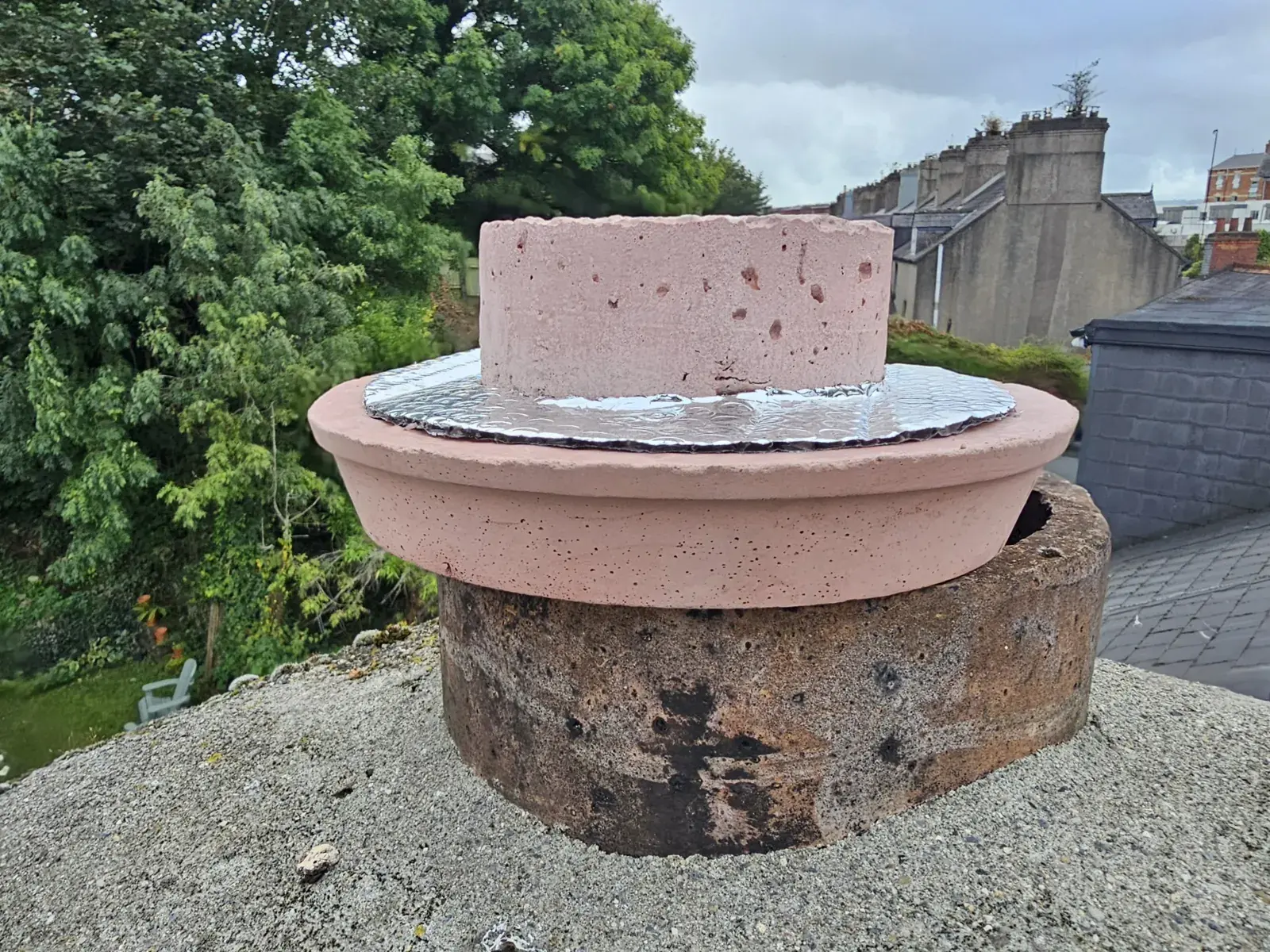
An open chimney you never light is a hole in the roof. Warm air from the house goes straight up it, rain comes down it, and jackdaws build in it. We fit a vented cap into the top of each unused pot, so the flue stops pulling heat and letting in weather, but still breathes enough to stay dry.
Also called capping off a chimney, fitting a chimney cap or cowl, or closing off a disused flue.
Updated September 2026
Not sure which pots are still in use? Ring 085 220 1422, or send a photo of the chimney to WhatsApp.
What an open, unused flue costs you
Heat loss all year, because an open flue keeps drawing warm air out of the room below
Cold draughts and a sooty smell from the fireplace on windy days
Rain running down the inside of the stack and staining the chimney breast
Jackdaws and other birds nesting in the pot, then twigs and debris falling into the grate
Frost damage to old pots and flaunching once water gets into them
A cap is not permanent. If you ever put in a stove or light the fire again, it comes off and the flue can be swept and used.
Capping a pot, step by step
Confirm which flue is which and that nothing below is still connected to it: stove, range, open fire or boiler
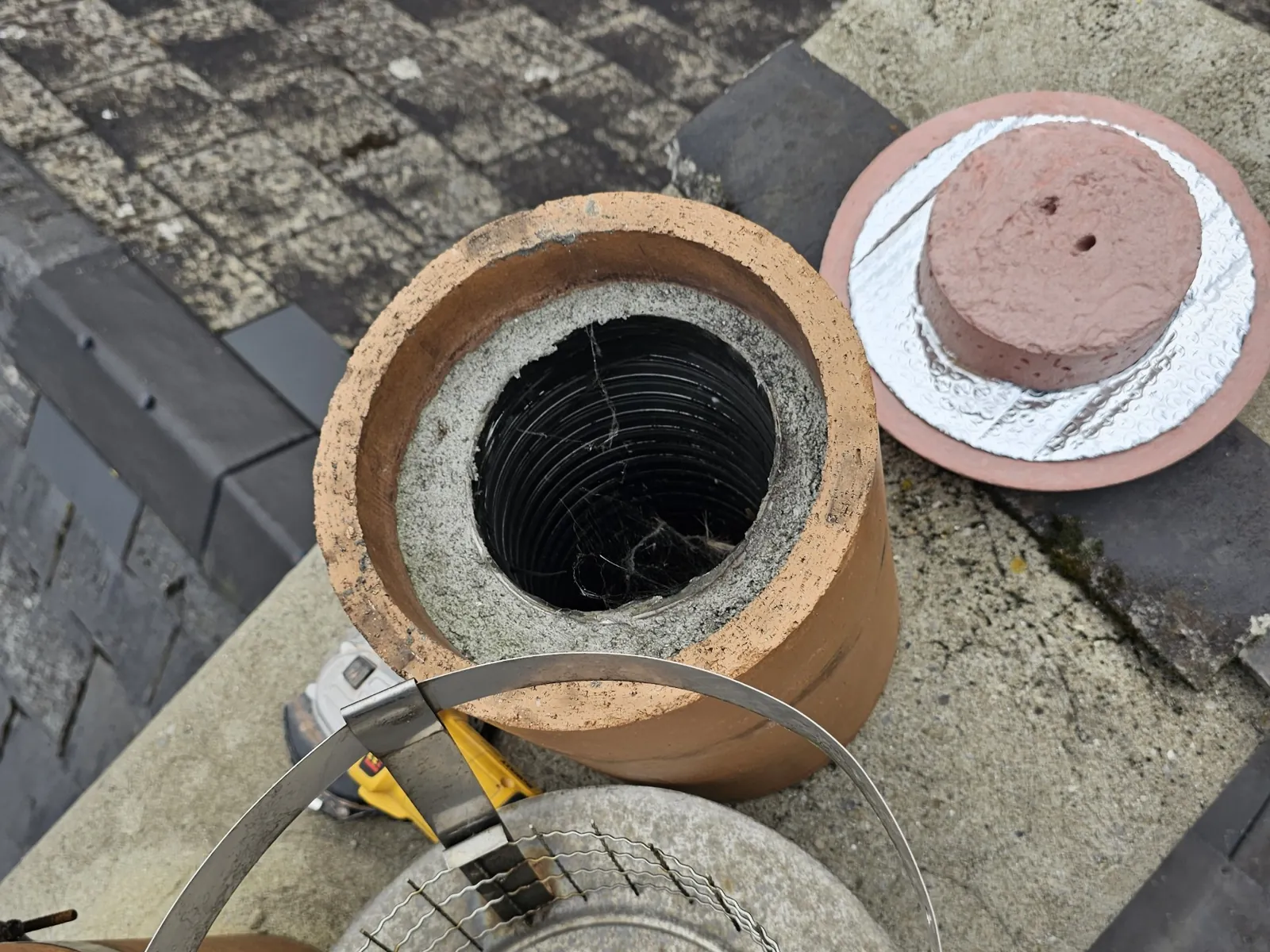
Take off the old cowl or bird guard and clean back the top of the pot
Check the pot and flaunching for cracks and repair them first, so the cap sits on sound material
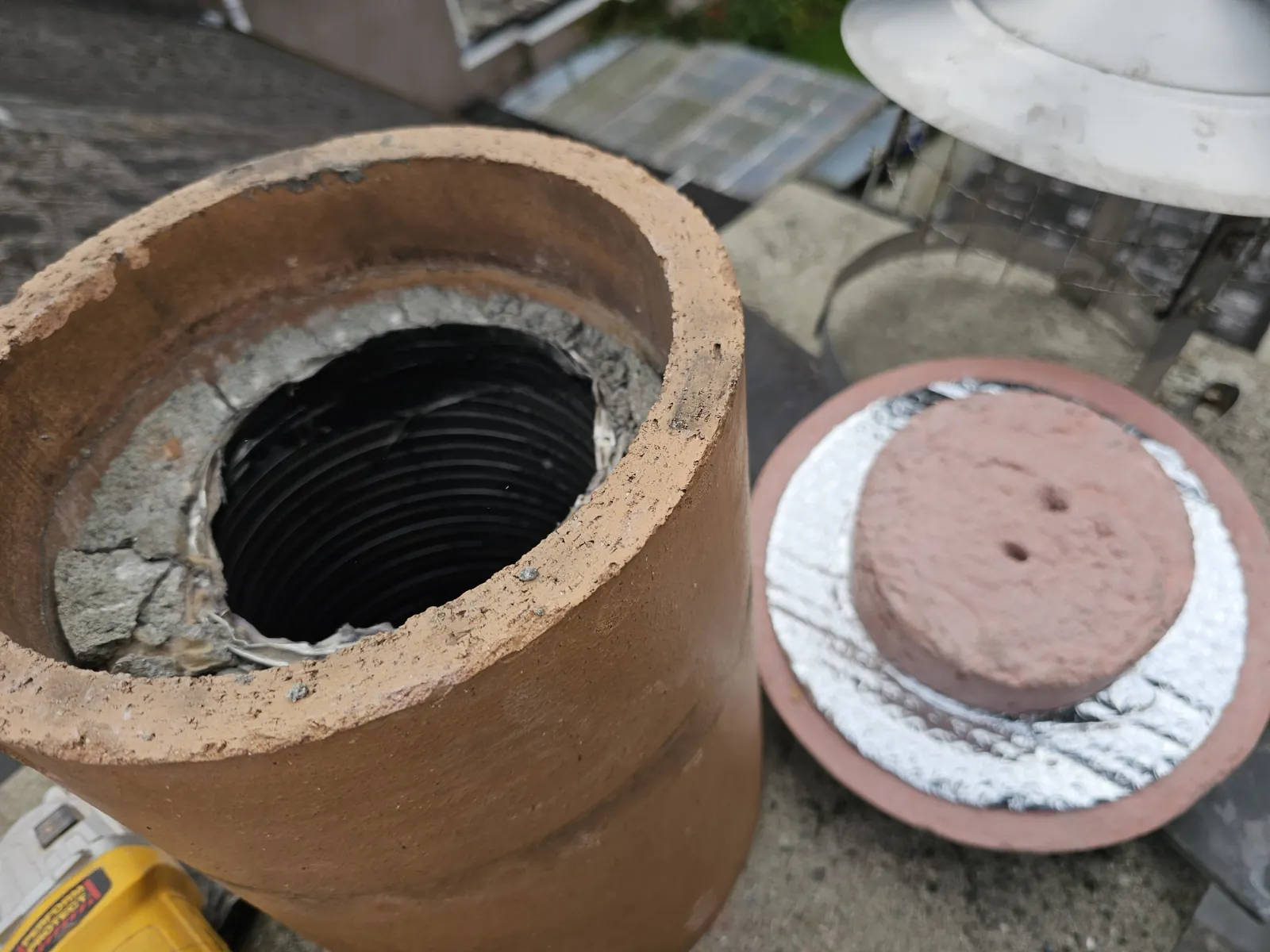
Fit a plug sized to the pot, with an insulation layer under the flange to cut heat loss and stop it rattling
Leave the small vent holes in the cap open, so a trickle of air keeps the flue dry
We never cap a flue that serves a working appliance. A blocked flue on a stove or boiler can fill the house with carbon monoxide.
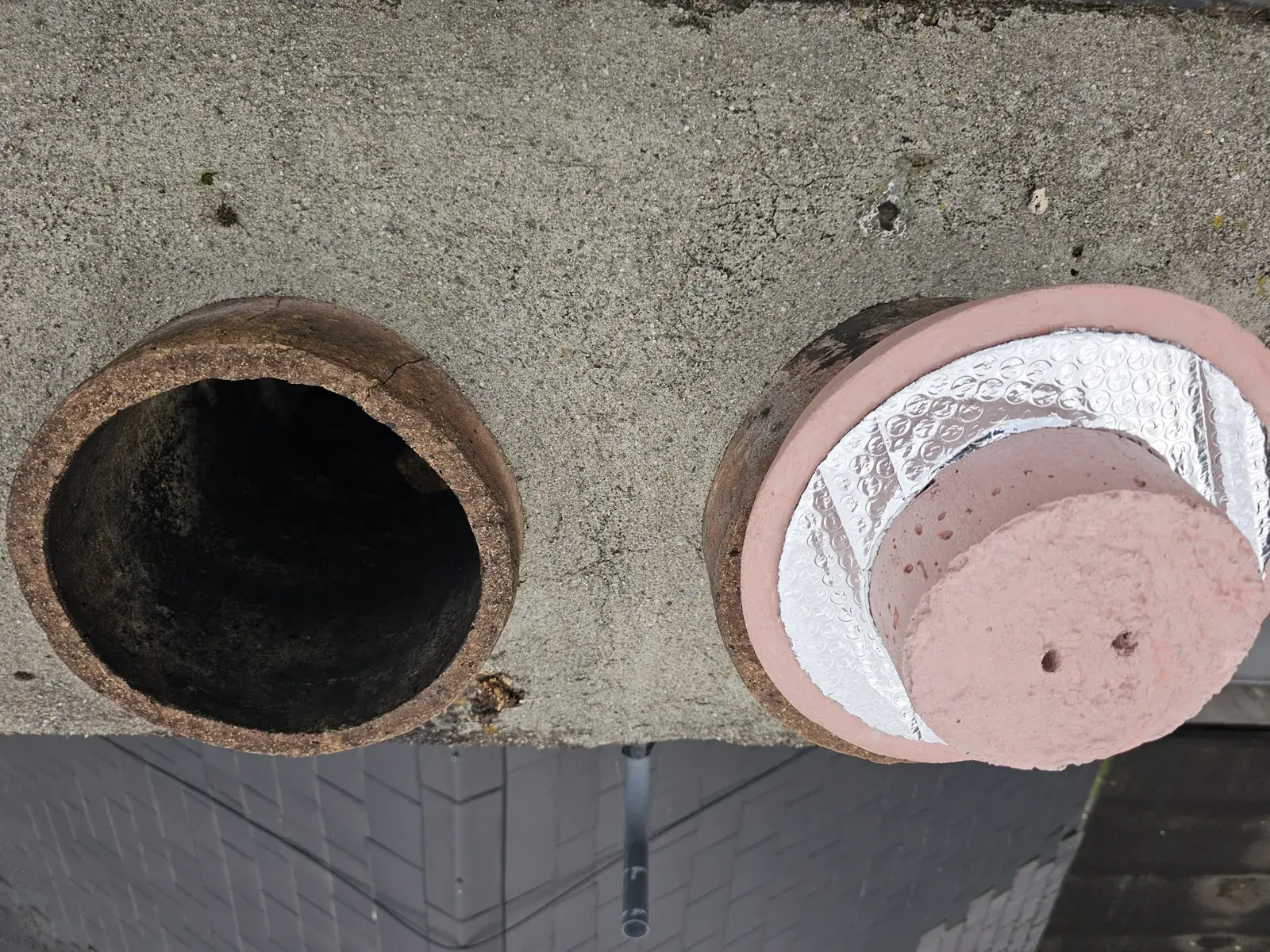
Capped and open, side by side
Why a vented cap, not a sealed one
It seems logical to seal a disused chimney completely. In practice a fully sealed flue traps moisture: rain that soaked into the brickwork and damp air from the house condense inside it with nowhere to go, and after a winter or two you see damp patches and stains on the chimney breast.
A vented cap keeps out rain, birds and most of the draught, while a small, steady flow of air carries moisture away. For that air to move, the flue needs a little ventilation at the bottom as well. If the fireplace has been boarded up, a small vent in the board or the chimney breast does the job, and we will tell you if yours needs one.
If the pots, flaunching or stack itself are in poor condition, capping alone will not stop the water. In that case we repair them first, as described on our chimney repair page, or quote to take the stack down below the roofline if it is no longer needed at all.
Chimney capping questions we get asked
Will capping my chimney cause damp?
Not with a vented cap and some ventilation at the fireplace below. Damp problems come from sealing a flue completely, top and bottom, so the moisture in it cannot escape. That is why we leave the vent in the cap open.
Can I use the fireplace again later?
Yes. The cap can be taken off. Before you light a fire or fit a stove, have the flue swept and checked, because it may have been years since it was last used.
I have several pots and only one fire. Can you cap just the unused ones?
Yes, that is the most common job. We work out which pot serves which room before we cap anything, and leave the one you use open with a cowl if it needs one.
Will a cap stop birds nesting in the chimney?
Yes. With the pot closed there is nowhere for jackdaws to get in. If there is already a nest in the flue, we clear what we can reach from the top before fitting the cap.
How much does chimney capping cost?
Capping a single pot that can be reached from the roof usually starts from around €250. A stack with several pots is typically €400 to €900, and scaffold is extra if the chimney cannot be reached safely without it. It works out cheaper alongside other roof work that already has access set up. We give a fixed price after a free survey across Kerry, Cork and Limerick.
Is the work guaranteed?
Yes. Like all of our work, it comes with a written guarantee.
Everything we do on a roof
We cover all three counties: roofers in Kerry, roofers in Cork and roofers in Limerick.
Chimneys, lead and the rest
A chimney is only as watertight as the lead and flaunching around it. These pages explain the other work we do on stacks and roofs.
Stop losing heat up a chimney you never use
Send us a photo of the stack or book a survey. We will tell you which pots can be capped and what it costs. Free survey across Kerry, Cork and Limerick.