Chimney repair and repointing in Kerry, Cork and Limerick
Repointing, rebuilding the head, new flaunching, pots and cowls, and fresh lead around the base. A chimney in poor order lets water into the roof and the rooms below.
Covers chimney repointing, chimney flashing, flaunching, rebuilding a chimney stack, new pots and cowls.
Updated September 2026
Want to know if this suits your roof? Send a photo to WhatsApp and we will say straight.
Roofs this suits
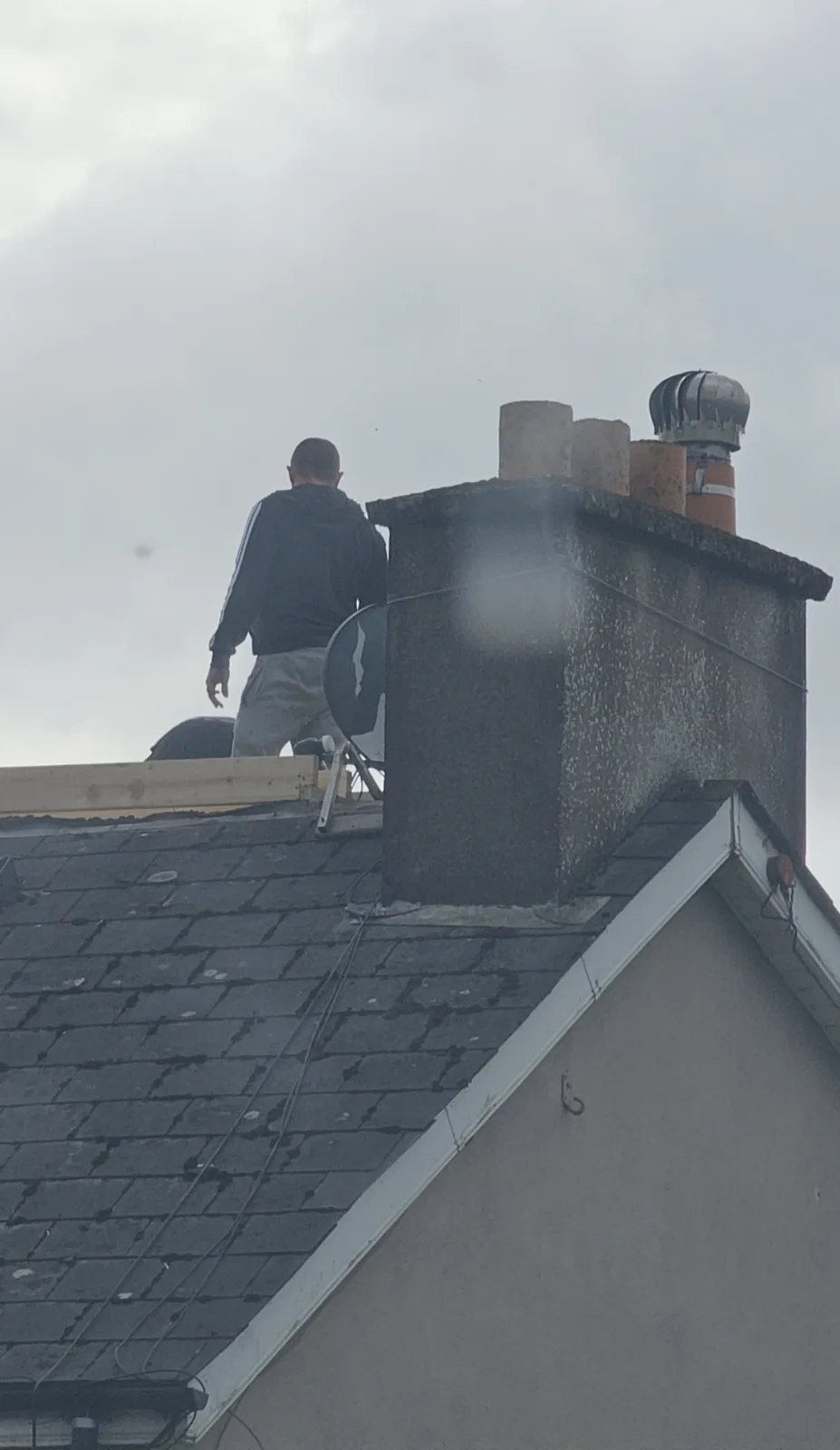
Cracked or loose pointing
Damp on the chimney breast
Leaning or crumbling stacks
Capping off a flue no longer in use
We flash the chimney at the same time so it is closed properly.
What you get for the money
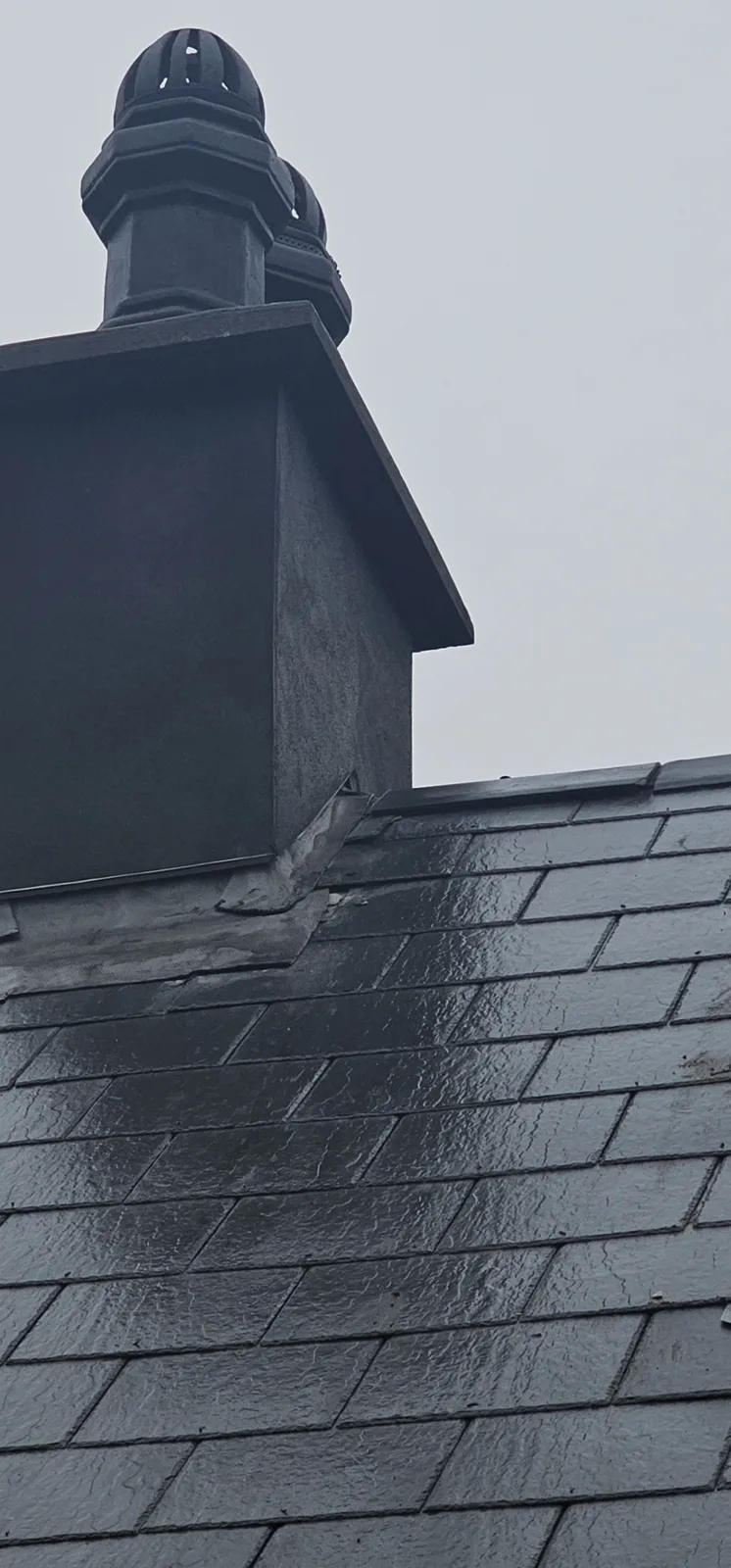
Closes the most common leak on an older roof
Cheaper than the plaster and decoration it saves
Done at the same time as the flashing
Scaffold is usually needed, which adds to the cost.
Chimney repair, in numbers
Life after repair
20 to 30 years on repointing and new flaunching, and 100 on the lead if it is dressed properly
Repointing mix
Lime mortar on old solid stone and brick, so the stack breathes. Hard sand-and-cement on a soft old stack traps water and spalls the face off it
Flaunching
Renewed at 50 to 75 mm thick with a fall away from the pots, weathered in one piece rather than patched
Lead around the base
Code 4 soakers and front apron, Code 5 back gutter behind the stack, all in pieces of 1.5 m or less
Fitted price guide
Roughly EUR 600 to EUR 2,500 depending on the height of the stack, the scope and the scaffold
Scaffold
Nearly always needed, and it is usually the biggest single line on the bill
Guide figures for the south west. Because scaffold dominates the cost, doing the chimney at the same time as any other roof work is a great deal cheaper than doing it on its own.
Damp on the chimney breast starts on top of the stack
A chimney takes weather on five sides while the rest of the roof takes it on one. It is the most exposed masonry on the house, it is the part nobody ever looks at, and it is behind most of the damp patches we get called to inside bedrooms.
Water gets in three ways: through open pointing on the stack, down through cracked flaunching around the pots, and past tired lead where the stack meets the roof. We deal with all three in one visit, because the scaffold is up and coming back for the second one costs almost as much as the first.
The mix matters more than people expect. An old solid stone or brick stack was built to let moisture out through the joints, and repointing it in hard sand-and-cement traps that water in the masonry, where frost then blows the face off the stone. On anything old we point in lime, and we would rather explain why than do the quick version.
If the fireplace below is never lit any more, ask us about capping the chimney while the scaffold is up. A vented cap stops the rain and the draught without trapping damp in the flue.
Chimney repair, asked and answered
There is damp on my chimney breast. Is it the roof?
Usually not the roof itself. It is normally the flashing at the base of the stack or the flaunching on top, and the water runs down inside the masonry and comes out on the plaster a metre or two lower. Replacing the ceiling before someone looks at the stack is a very common and very expensive mistake.
Do I need scaffold for a chimney repair?
For anything more than a look, yes, and it is normally the largest part of the cost. It is also why we suggest getting everything on that stack done at once rather than in two visits a year apart.
Should I take the chimney down or cap it?
If the flue is genuinely finished with, capping it with a vented cowl is cheaper than rebuilding and it keeps the stack ventilated so it dries out. Taking it down is a bigger job and it changes the roof, so we would want to be sure before doing it.
Can a leaning stack be saved?
Sometimes. A stack leaning from decayed mortar can be taken down to the sound course and rebuilt. One leaning because the flue or the structure below has gone is a different conversation and we will say so straight rather than repointing it and taking your money.
How much does chimney repair cost?
A new lead flashing is usually €400 to €1,400, repointing a stack €400 to €900, and a full treatment of repointing, flaunching and flashing €700 to €1,600. Scaffold is added on top when the stack cannot be reached safely from the roof. Rebuilding the head is priced after inspection.
We work with what suits the building
Not sure which material suits your roof?
Send us the address and a couple of photos. We will tell you straight what the roof needs, what it costs and how long it takes.