Lead flashing and lead work in Kerry, Cork and Limerick
Code lead flashings, soakers, valleys and saddles, dressed on site. Lead is what keeps water out where the roof meets something else, and it is where most old roofs fail first.
Covers lead flashing, chimney flashing, lead valleys, soakers, back gutters and lead saddles.
Updated September 2026
Want to know if this suits your roof? Send a photo to WhatsApp and we will say straight.
Roofs this suits
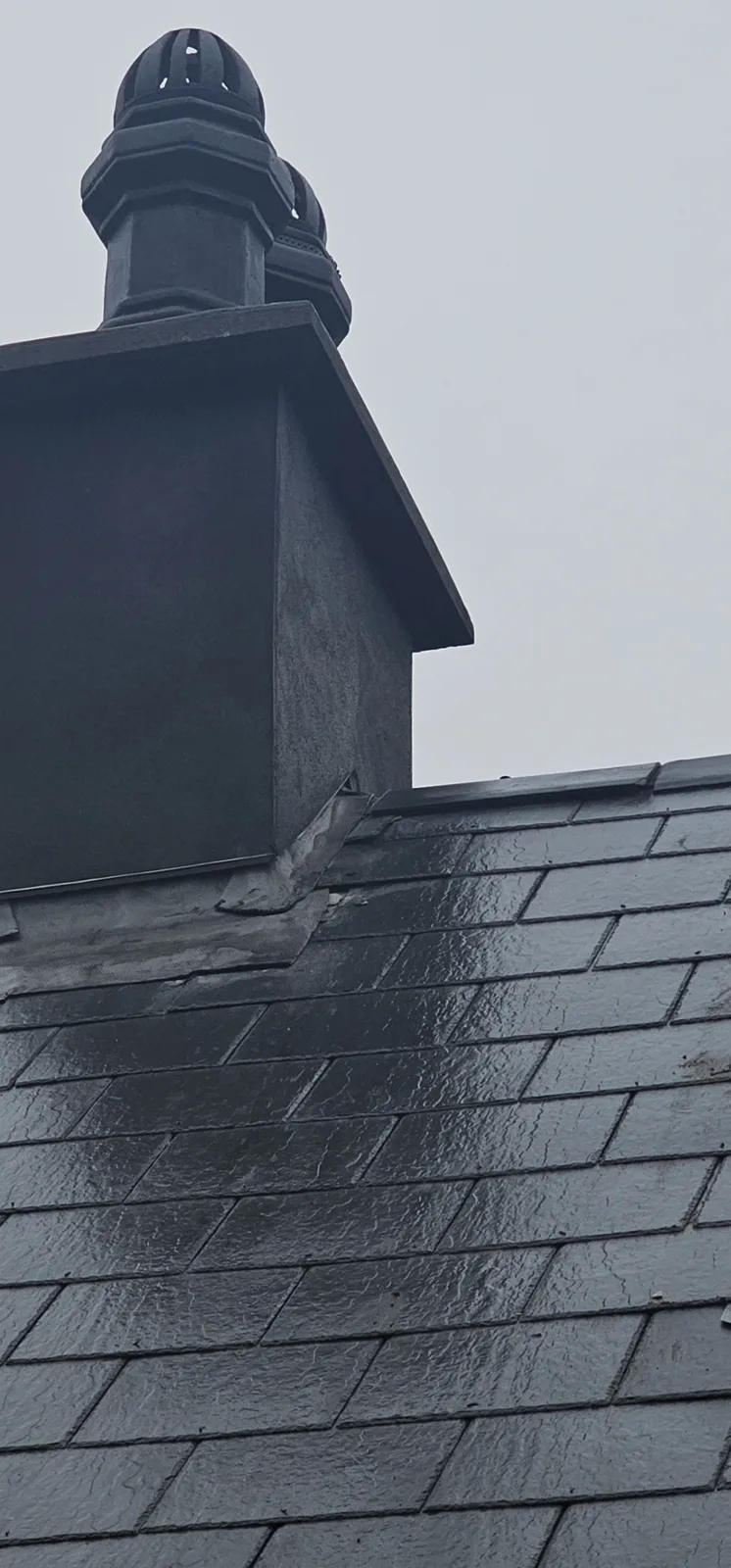
Chimney and parapet flashings
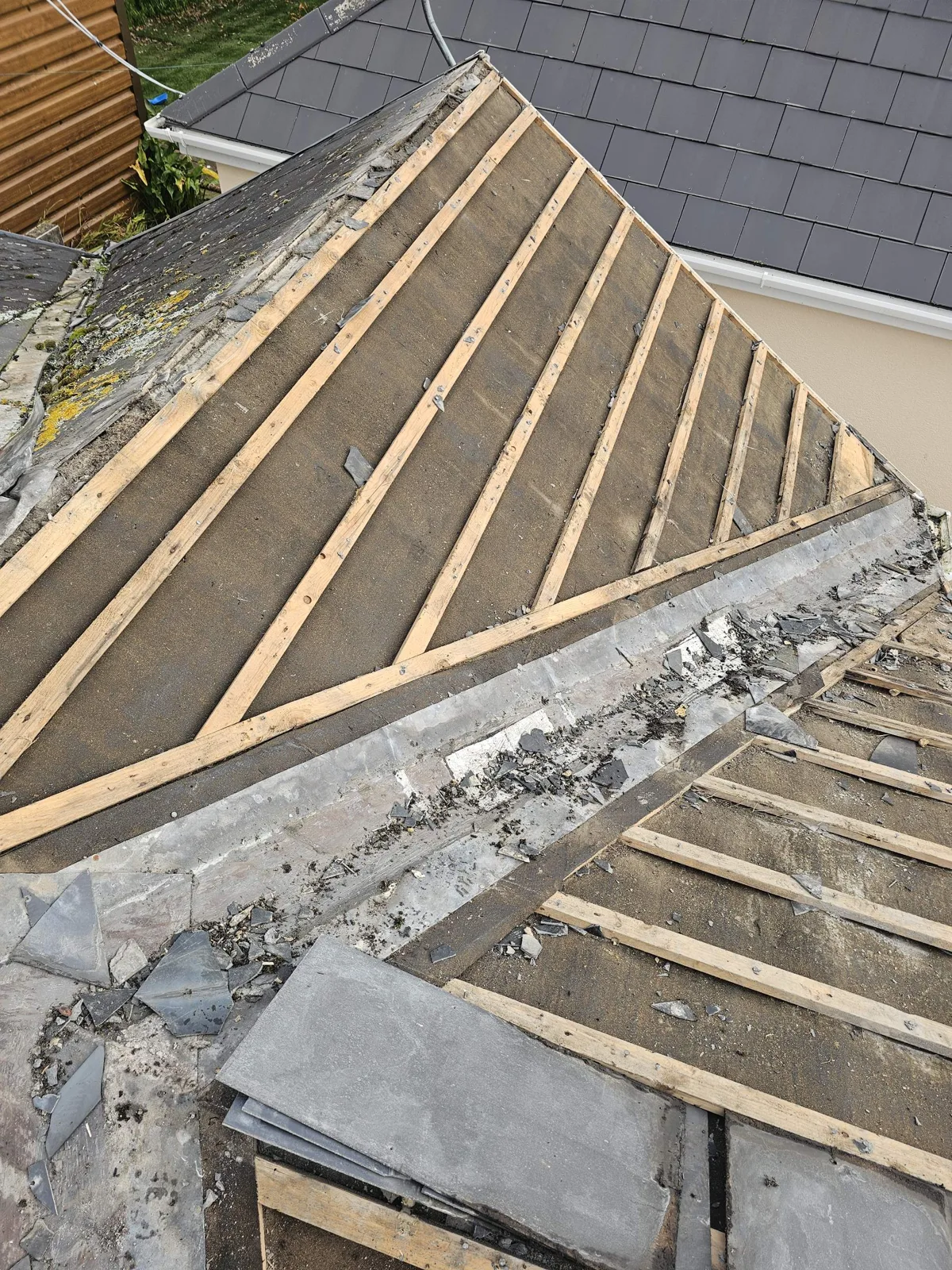
Valleys between two roofs
Abutments against walls
Bay roofs and porch saddles
We replace cracked or lifted lead rather than sealing over it.
What you get for the money
Lasts as long as the roof when dressed properly
Shapes to any junction, chimney or valley
Nothing else seals an abutment as well
Cracked lead cannot be sealed over, it has to be replaced.
Lead work, in numbers
Typical life
60 years or more when it is dressed and fixed properly. It often outlives the roof covering around it
Codes we use
Code 3 or 4 for soakers, Code 4 for cover and stepped flashings, Code 5 for aprons, valleys and back gutters, Code 6 where it is exposed or walked on
Maximum piece length
1.5 m per piece, with lapped joints. Longer runs are where cracked lead comes from
Fixings
Wedged into a raked-out joint and pointed, never nailed flat to a wall face and never held on mastic
Fitted price guide
Roughly EUR 60 to EUR 120 per linear metre of flashing, and chimneys are priced per stack
Where it fails
Long unjointed runs, and old lead that has fatigued and split along a fold
Guide figures for the south west. Most lead jobs are priced with scaffold, and scaffold is usually the bigger half of a chimney flashing bill.
Why lead cracks, and why mastic never fixes it
Lead expands and contracts every single day the sun hits it. Cut it in pieces of 1.5 m or less with proper laps and it moves freely and lasts for generations. Run a single 4 m length across a chimney because it saves a joint, and it will fatigue and split along a fold within about ten years. Almost every cracked flashing we replace was too long.
The second thing that ends a flashing is fixing method. Lead belongs wedged into a raked-out mortar joint and pointed over, so it is held at the top and free everywhere else. Nailed flat against a wall it tears at the fixings, and a bead of mastic over a split is a repair with a lifespan measured in months.
So when we open a chimney up, the old lead comes off and new goes on: soakers, front apron, side step flashings and a Code 5 back gutter behind the stack. It is usually done at the same time as repointing and re-flaunching the stack, because the scaffold is up either way and doing one without the other is money wasted.
If you want the detail behind all of this — aprons, soakers, saddles, back gutters, valleys, lead codes and what good work looks like — we wrote it all up in our guide to lead flashing on Irish roofs, including how internal and external corners should be formed.
Lead work, asked and answered
Can you just seal the crack in my lead flashing?
We will not, because it does not hold. The lead cracked because it was moving, and mastic over the top cracks in the same place the following summer. Replacing that piece properly costs a little more once instead of a little every year.
What causes damp on a chimney breast?
Nine times out of ten it is the flashing or the flaunching on top of the stack rather than anything wrong with the roof. It shows up on the plaster in the bedroom and people replace the ceiling before anyone looks at the chimney.
What code lead do I need?
Code 3 or 4 for soakers, Code 4 for cover and stepped flashings, Code 5 for aprons, valleys and back gutters, Code 6 where it is exposed or gets walked on. On the Kerry and West Cork coast we go up a code on anything exposed. We put the code on the quote so you can check what went on the roof.
Do you use lead substitutes?
On some jobs, and we will tell you when. They are lighter, cheaper and useful where theft is a real risk. On a period house, a valley or anything a conservation officer is looking at, it is milled lead and nothing else.
How much does lead flashing cost?
Renewing a lead flashing is usually €400 to €1,400, depending on its length and whether it is at a chimney. A new lead valley is typically €500 to €1,200. Scaffold is extra where the work cannot be reached from the roof.
We work with what suits the building
Not sure which material suits your roof?
Send us the address and a couple of photos. We will tell you straight what the roof needs, what it costs and how long it takes.