Clay tile roofing in Kerry, Cork and Limerick
Fired clay tile that holds its colour instead of fading. Plain tile or pantile, both suit older buildings and holiday homes where the look of the roof carries the house.
Covers clay roof tiles, terracotta tiles, plain tiles and pantiles for new roofs and re-roofing.
Updated September 2026
Want to know if this suits your roof? Send a photo to WhatsApp and we will say straight.
Roofs this suits
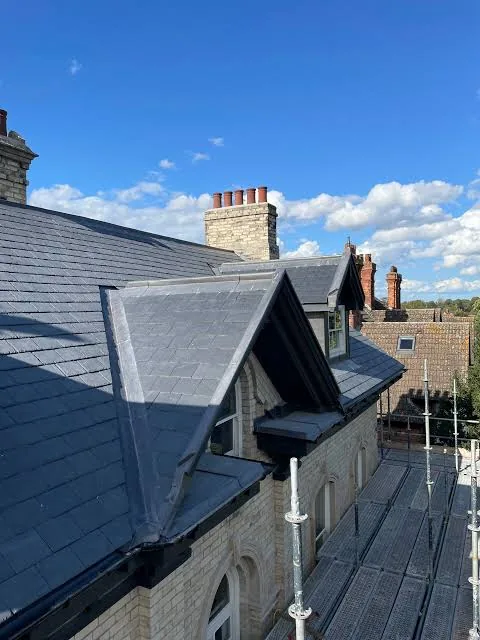
Character houses and cottages
Restoration and conservation work
Feature roofs and porches
Roofs matched to original clay
Colour is stable, so a patch stays close to the rest of the roof.
What you get for the money
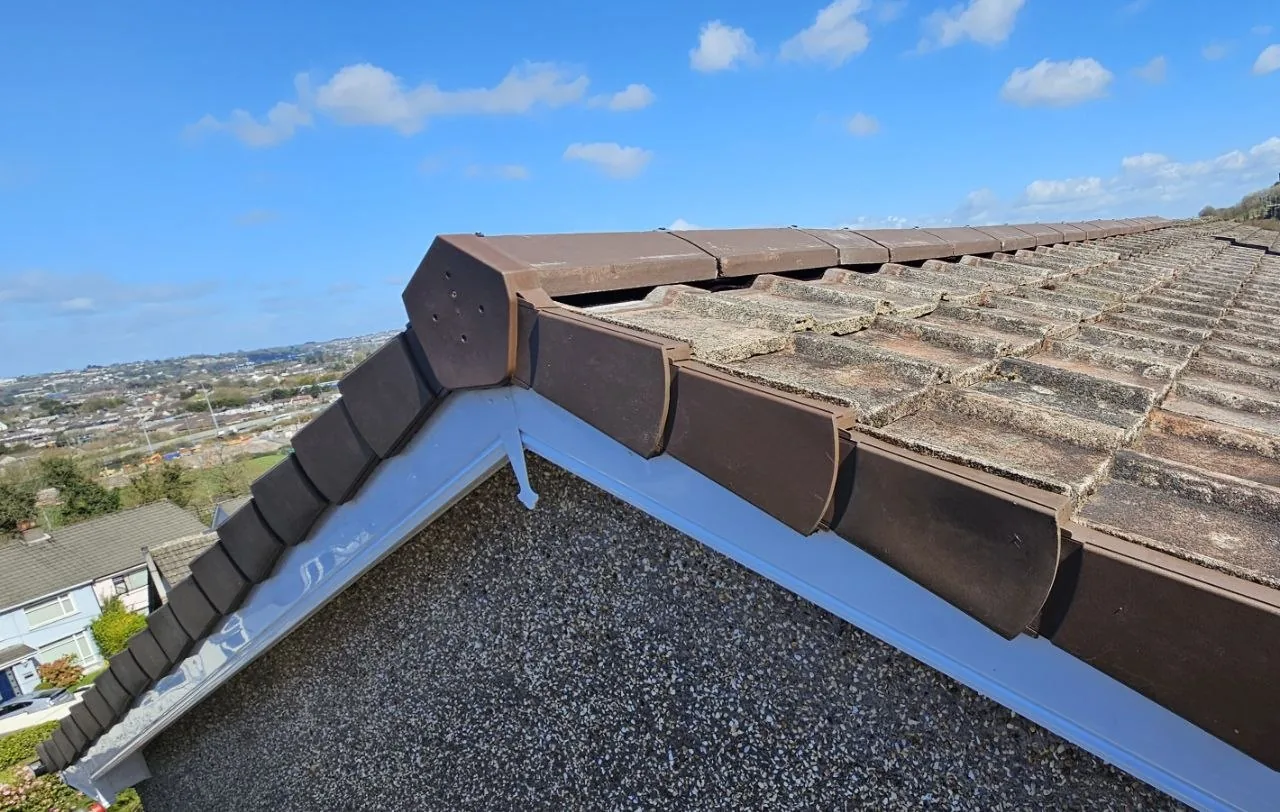
Colour is fired in, so it holds for the life of the roof
Suits period and conservation work
Sheds water well on steeper pitches
Costs more than concrete and needs a decent pitch.
Clay tile, in numbers
Typical life
60 to 100 years, and the colour is the same at the end as it was on day one
Minimum pitch
35 degrees for a double-lapped plain tile, 30 for most pantiles. Below that it is the wrong covering
Weight on the roof
65 to 75 kg per square metre for plain tile, 45 to 50 for pantile. Plain tile is the heaviest thing we put on a roof
Fixings
Nibs plus nails, and every tile fixed at verges, eaves, ridge and around openings
Fitted price guide
Roughly EUR 80 to EUR 130 per square metre supplied and fitted, scaffold on top
Repairs
Tile by tile, and a new tile sits in beside forty-year-old ones without shouting about it
Guide figures for the south west before scaffold. Plain tile costs more to lay than pantile because there are roughly sixty tiles to the square metre instead of about sixteen.
Why the pitch decides this one
Clay is the covering people fall in love with and then get talked out of, usually because of pitch. A double-lapped plain tile roof relies on gravity and lap alone, and under about 35 degrees wind-driven rain gets in over the head of the tile. We measure the pitch before we talk about colour.
Weight is the other honest constraint. Plain clay tile is heavier per square metre than concrete, so on a roof built for fibre cement slate the rafters usually need checking and sometimes strengthening. On a house that was clay to begin with, none of this arises.
What you get in return is colour that never needs anything done to it. Concrete dulls, coated products fade, and clay is the same fired colour in sixty years as it is now, which is why a patched clay roof does not look patched. If the pitch will not carry it, the closest look on a lower pitch is a good natural slate, and we would rather say that than sell you a roof that leaks.
Clay tile, asked and answered
What pitch does a clay tile roof need?
About 35 degrees for a double-lapped plain tile and about 30 for a pantile, depending on the maker and on how exposed the site is. If your roof is flatter than that, clay is the wrong answer regardless of how it looks.
Do clay tiles crack in frost?
Modern kiln-fired clay tile is frost-tested and Irish winters are mild for it. Old handmade tiles are softer and can spall, which is one reason a conservation job is priced tile by tile rather than by the roof.
Can you match the clay tiles already on my house?
Often, yes. There are still ranges made to old sizes and profiles, and salvaged tile is available for conservation work. We bring a sample up to the roof and look at it against yours in daylight before anything is ordered.
Is clay worth the extra over concrete?
On a period house or anything a planner is looking at, yes. On a 1970s bungalow behind a hedge, honestly not. Concrete tile does the same job for less, and we will say so.
How much does a clay tile roof cost?
Clay tile is typically €120 to €170 per m² for materials and labour, before scaffold. On a three-bed semi that usually puts a full clay re-roof at the upper end of the €11,000 to €18,000 range.
We work with what suits the building
Not sure which material suits your roof?
Send us the address and a couple of photos. We will tell you straight what the roof needs, what it costs and how long it takes.